
This spring, the Institute for Teaching, Innovation, and Inclusive Pedagogy (TIIP) launched its first-ever Student Pedagogical Partner fellowship. The program brings undergraduate students into the heart of teaching and learning at Rutgers. As student partners, they observe classes, provide feedback to instructors, co-create resources with TIIP staff, and contribute to a multi-site research study on effective teaching practices. Over time, the fellowship will expand and be integrated into other TIIP programs. It’s a model of collaboration that puts student voice at the center of the classroom experience.
As the fellowship unfolded, students began to navigate an entirely new role that challenged their assumptions and redefined how they viewed teaching and learning. Shifting from student to pedagogical partner gave fellows a chance to see the classroom through a different lens. Many noted how this new perspective deepened their appreciation for what goes into effective teaching and revealed dynamics they hadn’t noticed before.

“It has been a very unique experience to be an observer in the classroom rather than a student…Being able to pay close attention to [the instructor] has given me a lot of perspective on what it means to actually create an engaging classroom…It has given me a lot more respect for instructors who put a lot of effort into creating creative lesson plans that actually boost student learning way more than they know.”

“It has been a pleasure to observe classes as a pedagogical fellow. As a fellow, you develop a new perspective and way of thinking about the student experience within the classroom. This experience has opened a new method and developed a way of thinking that is embedded in active and effective teaching practices. It has allowed me to consider multiple perspectives and effective practices thatensure retention and engagement within the classroom.”
The fellowship also challenged students to think critically about learning environments, not just about how they learn but how others do too. For some, it sparked new academic or professional interests. For others, it changed how they show up in their own classes.

“This experience continues to remind me of the personalities and ideas that professors have when approaching the task of teaching and helping their students learn. Personally, I had switched my major because of my performance in Calculus I, and after meeting one of my partners, I have regained the confidence which I first had when attempting to complete my engineering major. I will be returning to take Calculus I, and I was able to do this thanks to this experience.”
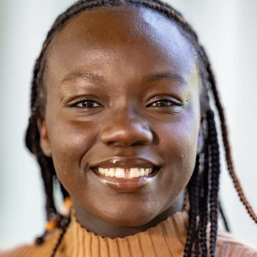
“This experience has impacted me because I can understand how to break down information for other people to understand. Academically, this would be a helpful skill when explaining a concept to other people. Professionally, I would know how to create plans that would benefit all parties involved. This changed the way I think when my professor gives a specific layout for an assignment.”
When asked what they would say to students considering the program, each fellow emphasized how rewarding the experience has been and their advice reflects both the personal growth and the collaborative spirit at the heart of the fellowship.

“It is a very rewarding experience, and it’s really fun, especially if you end up being assigned to a professor with a discipline very different from your own. One moment I am writing a paper, and the next I’m watching people incinerate things…At the end of the day, you are an undergraduate student delivering feedback to a professor…It is a great exercise in getting across your point of view and having productive conversations. These are skills necessary for any discipline.”

“I would definitely tell [students] they’re confident in their ability to communicate effectively and manage time. This is a super rewarding experience and they will find themselves connecting with staff, professors, and fellow student partners across a variety of disciplines.”
Just as the fellowship encouraged students to see the classroom differently, it also gave instructors an opportunity to reflect more deeply on their own teaching. For some, having a student in the room as a partner rather than a participant brought fresh perspective and insight.

“Having a student observe my class as a pedagogical partner was a uniquely rewarding experience…I felt like I had a co-thinker, someone genuinely invested in the learning process alongside me. The student brought fresh insights that I might have overlooked, especially in terms of how certain activities or discussions landed with their peers. They noticed subtle things about pacing, engagement, and inclusion that were incredibly helpful…What I appreciated most was the sense of mutual respect…a joint effort to make the learning environment more effective. It made me more intentional in my choices and reminded me of the power of student voice when it’s valued in meaningful, structured ways.”
“It was a fantastic opportunity that I volunteered to be a part of it…Kyle brought thoughtful insights, prior knowledge of the Calculus domain content, and a strong commitment to enhancing teaching and learning for his peers. He drew from his training in Dr. Tracie Addy’ s PAITE inclusive teaching framework and his own experiences in high school and Rutgers classrooms to provide objective and constructive feedback. It felt great to be acknowledged for the intentional choices I make in teaching such as using student names, recognizing students’ physical (and mental) presence in early morning classes, and incorporating “wait time” to support processing of new material. One suggestion that stood out came from Kyle, who humbly acknowledged the challenge of encouraging participation in an 8:30 a.m. class. He recommended cold calling to boost engagement. I was hesitant at first, not wanting to put students on the spot. But then I reframed it as a “warm call” and introduced it that way to my students. The result? A few giggles, some thumbs up (and one memorable thumb down 😄), and – most importantly – a noticeable increase in alertness and participation.”
The partnership also prompted faculty to think more deeply about their own teaching practices. In some cases, it led to meaningful changes in the way they structured class time, engaged students, or created a more inclusive learning environment.

“Student partnership has profoundly impacted how I think about creating inclusive learning environments. Through collaboration with my student partner, I became more aware of the importance of using student names consistently, not just as a gesture of respect but as a way to foster belonging…Another key insight from this partnership was the power of affirmations. My student partner observed that students seemed more willing to contribute when their ideas were acknowledged positively. In response, I’ve started incorporating regular affirmations thanking students for their input…These small but intentional shifts help build a classroom culture where students feel seen, heard, and more confident to engage.”
“The experience highlighted the significance of gathering student feedback through mid-semester and/or end-of-semester surveys to understand what supports their learning effectively and what does not.”
We also asked the instructors what they might say to others thinking about joining the program and their responses speak to just how meaningful the experience has already been.

“I would tell them that this is a wonderful opportunity to get such individualized support. The structure of three observations with pre and post discussions is wonderful as it allows for a much richer discussion of the course than a one-time peer observation. Also, no matter how hard we try to be transparent and accessible there’s no better way to know if we are meeting these goals than to get student perspectives!”

“I really appreciated the feedback, especially from a student perspective. One asks for feedback from the current students in the class, and but they are fearful to answer. With this it was done in real time and adjustments can be made.”

“For anyone considering the program, I’d say: Go for it! It’s well worth the time. It gives you language, it gives you data, and it gives you a clear picture of your teaching practices. I don’t normally break down my class in percentages and pie charts but seeing that kind of feedback laid out visually helped me understand how I was spending time, what inclusive practices were showing up in that class, and where there was room to grow. It was reflective, practical, and deeply worthwhile. It offers a unique opportunity to think, get inspired, and hear directly from students in a thoughtful, structured way that centers growth.”
These early reflections show just how impactful the fellowship has already been. Instructors and students alike are learning from each other and gaining a deeper appreciation for what meaningful, effective teaching can look like. As this fellowship continues to grow and evolve, we hope it creates even more opportunities for collaboration and connection across the university.