Navigating Generative AI in Coursework: Identifying & Addressing Pitfalls
Resource Overview
Higher education is at a time where generative artificial intelligence (GenAI) is rapidly shaping teaching and learning environments. Such technologies, like ChatGPT, use algorithms to generate various outputs such as text, images, audio, and music, and they continue to increase in sophistication. What can students and instructors do to navigate this moment?
This resource, developed for instructors and students, was co-created with a design team of student pedagogical partners at the Institute for Teaching, Innovation, & Inclusive Pedagogy. Teaching assistants and learning assistants may also find utility in this site. The resource addresses three critical challenges that can be experienced related to GenAI in coursework:
- Academic Integrity – determining permissions
- Output Quality – managing inaccuracies in outputs
- Disciplinary Variations – ensuring responsible usage when policies vary across courses
To develop this resource, the student design team gathered with TIIP team members for several 1-hour sessions. During these sessions, they brainstormed various issues around learning and GenAI and selected the three challenges featured in this resource. The design team developed scenarios that illustrated each of this challenges, drafted recommendations for students and instructors, and created storyboards which led to the vignettes included below.
How to Use This Resource
To maximize usage of this site:
- Watch the overview video for a preliminary sense of each scenario.
- View each scenario individually and reflect on what could have been done to prevent it from happening.
- Review the recommendations.
- Consider your own teaching or learning experiences and how you can apply the information in the resource by answering the reflection questions at the bottom of the page.
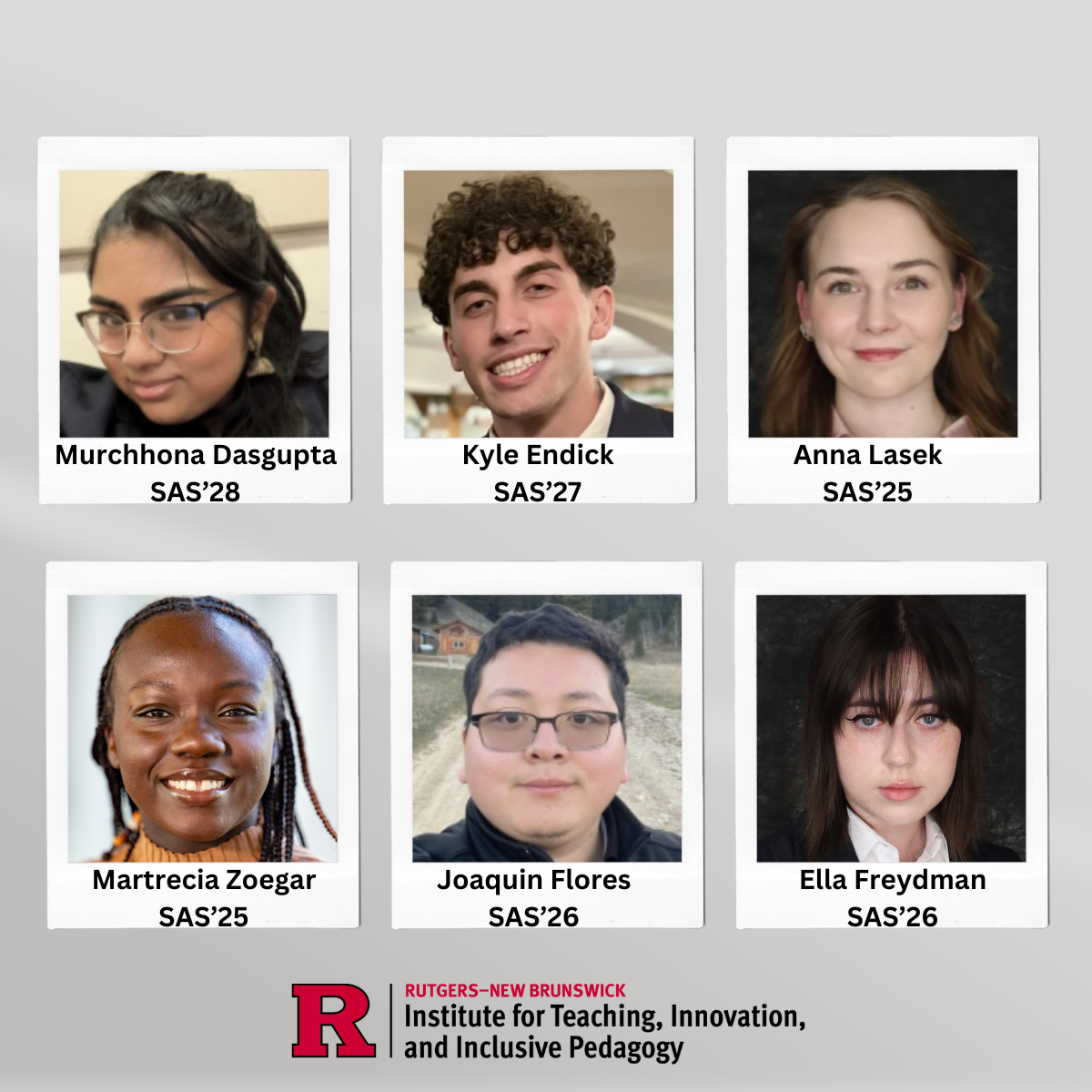
Meet the Student Co-Design Team!
Scenario 1: Academic Integrity Concerns
Prompt: How can instructors and students support the adoption of GenAI course guidelines and foster learning?
Recommendations
For Instructors
- Ensure that guidelines regarding students’ usage of GenAI are clear, transparent, and accessible.
- Keep student learning at the focus for all assignments and grading rather than solely on the end products.
- Discuss any consequences if students deviate from these guidelines and the reasons why (e.g. to support their learning).
- Enforce guidelines using human-centered approaches.
- Coach students in understanding that they may not always be able to use GenAI on their assignments and the importance of their own learning and skill development.
- Consider modifying assignments to address the current landscape around GenAI.
- Offer a non-GenAI version of the assignment if GenAI is allowed.
- Indicate whether disclosure and citation of GenAI usage is required.
- Teach students how to create GenAI prompts that are acceptable.
For Students
- Carefully read and follow generative AI guidelines for each assignment or ask your instructor if you have any questions.
Scenario 2: Output Quality Issues
Prompt: How can instructors and students address GenAI output quality concerns?
Recommendations
Instructors
- Discuss the importance of being critical about GenAI outputs with students and model this approach with students.
- Teach students how to brainstorm with GenAI and cite.
- Teach students how to double-check references cited by GenAI.
Students
- Use reputable resources provided by the university, e.g. databases such as JSTOR, Google Scholar, Sage Publishing, other scholarly search engines. See Rutgers Libraries.
- Use caution and be aware that in addition to producing inaccurate references, data analyses, and other outputs generated might also be inaccurate.
- Verify factual information and be critical of accuracy.
- Reach out to classmates, your TA, or your professor about what is expected on assignments if you are unsure.
Scenarios 3 & 4: Navigating Disciplinary Variations
Prompt: How can instructors and students navigate GenAI guidelines when they differ across courses?
Recommendations
Instructors
- Acknowledge that GenAI is accessible to students and consider usage that does not align your course guidelines.
- Consider engaging in discussions with colleagues in your department to gather a sense of how they are framing their generative AI policies to try to collaborate and develop a more consistent framework for students studying within the discipline.
Students
- Read the syllabus to understand the specific GenAI policy for each course.
- When in doubt, ask in what capacity GenAI is allowed in this class and for any examples.
- Utilize GenAI when allowed only if really needed, as to prevent an over-reliance on it.
End-of-Resource Reflection Questions
Have you encountered any of these scenarios?
- If so, which one(s)? How did you address each scenario you faced?
- If not, how might you approach any of these scenarios if they arose?
After watching the vignettes and reviewing the recommendations, what, if anything, might you do differently if they happened?
For instructors only: Which approaches will you take to grading in the event that course guidelines are not followed?
Reference
Gallant, T. B., & Rettinger, D. A. (2025). The Opposite of Cheating: Teaching for Integrity in the Age of AI (Vol. 4). University of Oklahoma Press.

Updated: July 10, 2025