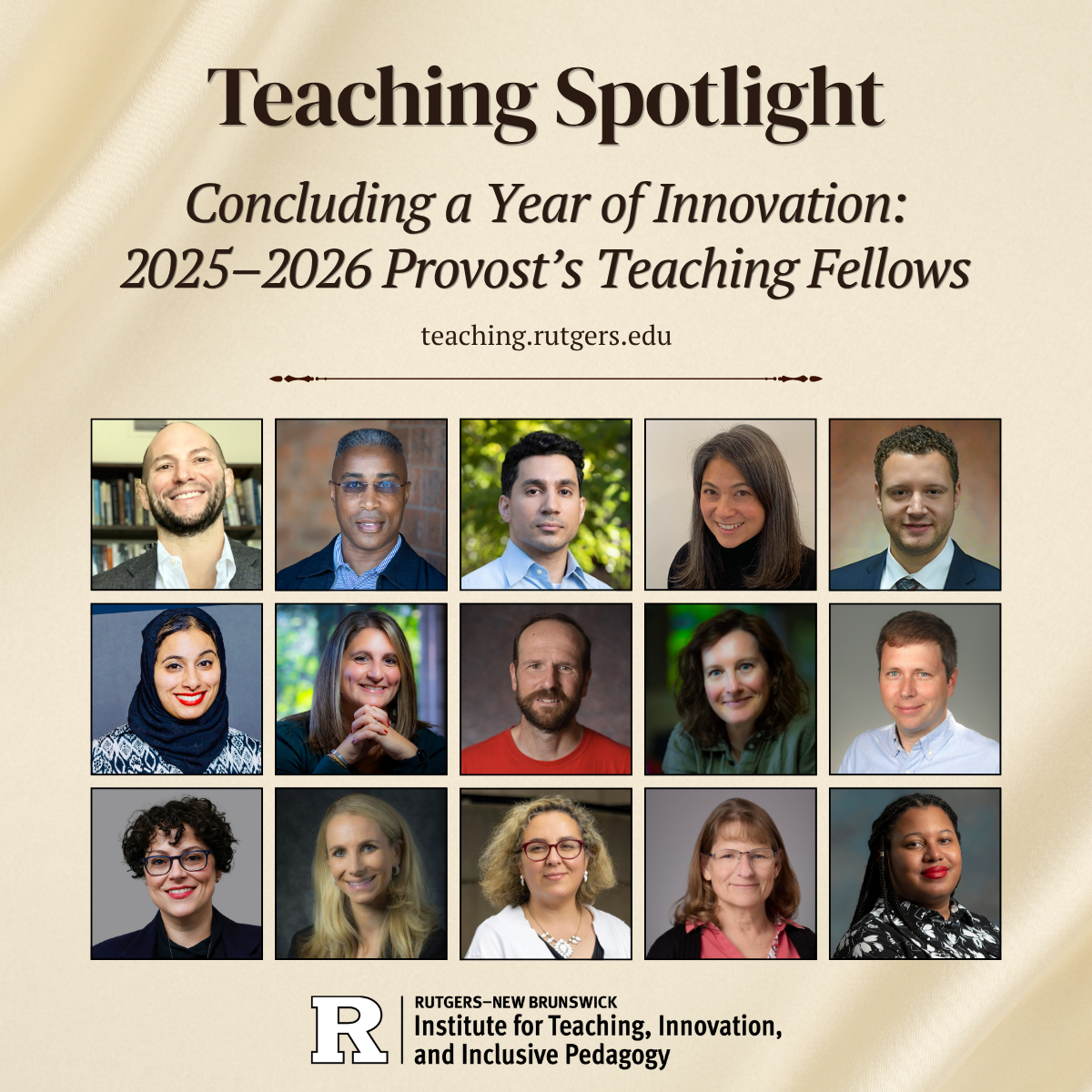
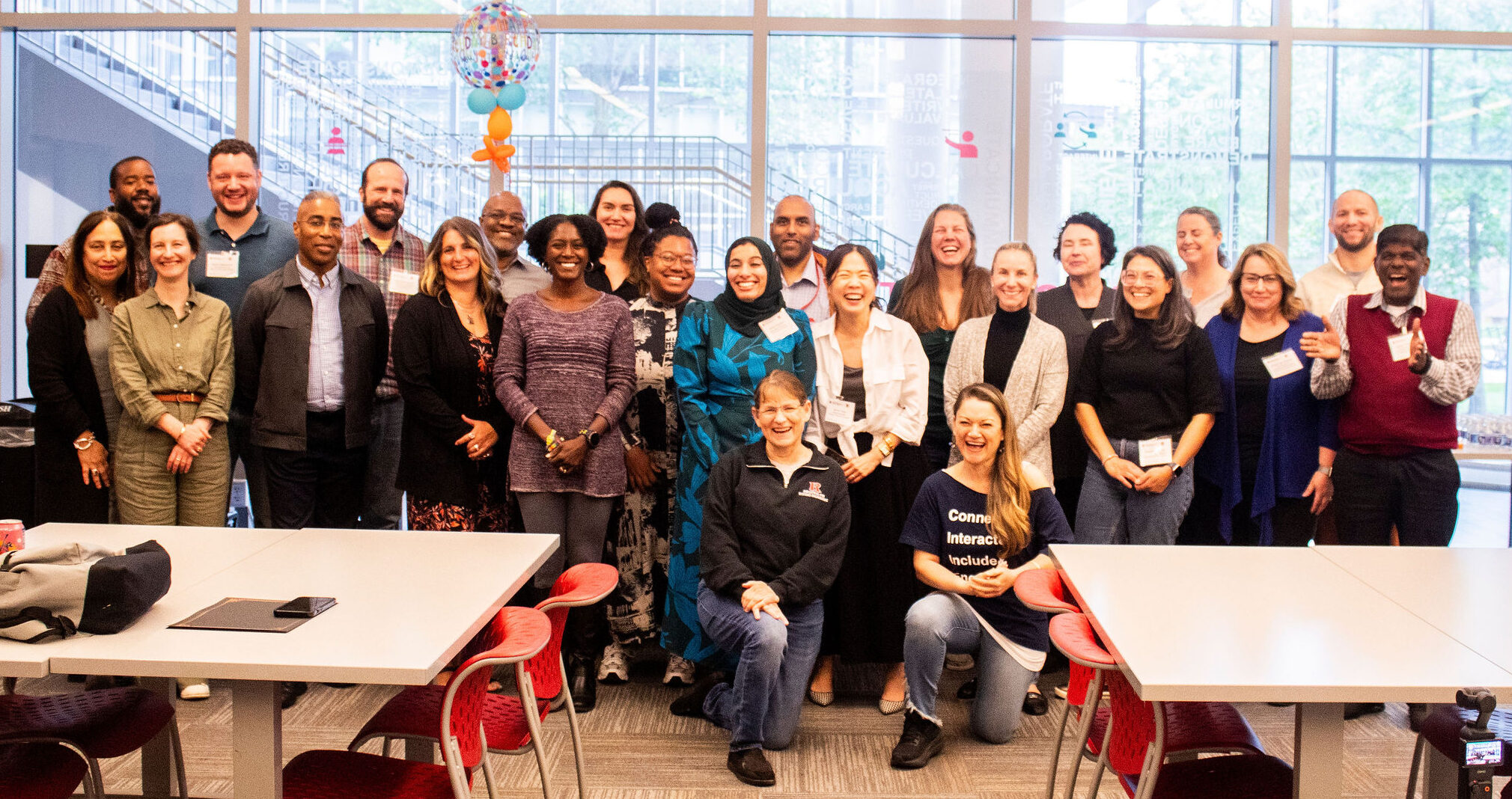
Top row, left to right: Douglas Cantor, Frederick Curry, Kevin Dahaghi, Liz Decker, Jason Henderson. Middle row, left to right: Amml Hussein, Amy Lewis, John McLaughlin, Christelle Palpacuer-Lee, Will Payne. Bottom row, left to right: Cara Phillips, Andrea Spaeth, Sheila Tabanli, Elin Wicks, Teona Williams.
At the heart of student success are educators who care deeply about their craft—an ethos exemplified by the 2025–2026 Provost’s Teaching Fellows. Following the conclusion of their year-long fellowship this past May, the Institute for Teaching, Innovation, and Inclusive Pedagogy (TIIP) is thrilled to honor the dedication, innovation, and dynamic contributions of this extraordinary cohort.
The Provost’s Teaching Fellowship program, an initiative launched by the Rutgers—New Brunswick Office of the Provost, and spearheaded by TIIP, is designed to promote student success across the university by supporting instructors as they innovate their teaching practices and redesign their courses. Through their dedication to continuous learning and professional development, Provost’s Teaching Fellows foster a culture of pedagogical excellence that directly enhances the learning experience for thousands of students across our campus.
Meet the Cohort
The 2025–2026 cohort brought together 15 instructors representing a rich cross-section of university disciplines. Spanning the arts and humanities, STEM, health sciences, and professional studies, these fellows proved that meaningful teaching innovation isn’t one-size-fits-all, but an adaptable approach that can be tailored to the unique demands of every classroom.
- Douglas Cantor | Assistant Teaching Professor | Political Science | School of Arts & Sciences
- Frederick Curry | Associate Professor | Dance & Dance Education | Mason Gross School of the Arts
- Kevin Dahaghi | Assistant Professor | Sociology & Criminal Justice | School of Arts & Sciences
- Liz Decker | Assistant Teaching Professor | English Writing Program | School of Arts & Sciences
- Jason Henderson | Assistant Teaching Professor | Sports Management | School of Arts & Sciences
- Amml Hussein | Associate Teaching Professor | Social Work & Research | School of Social Work
- Amy Lewis | Associate Teaching Professor | Teacher Preparation | Graduate School of Education
- John McLaughlin | Associate Research Professor | Plant Pathology & Microbiology | School of Environmental & Biological Sciences
- Christelle Palpacuer-Lee | Teaching Professor | Applied Linguistics | Graduate School of Education
- Will Payne | Associate Professor | Urban Planning & Geography | Bloustein School of Planning & Public Policy
- Cara Phillips | Assistant Teaching Professor | Applied Behavior Analysis | Graduate School of Applied & Professional Psychology
- Andrea Spaeth | Associate Professor | Kinesiology | School of Arts & Sciences
- Sheila Tabanli | Associate Teaching Professor | Mathematics | School of Arts & Sciences
- Elin Wicks | Associate Teaching Professor | Industrial Engineering | School of Engineering
- Teona Williams | Assistant Professor | Geography | School of Arts & Sciences
Designing for Success: Inside the Fellowship Year
Transforming a course requires time, collaboration, and thoughtful reflection. Over the course of a full year, the fellows engaged in a continuous, structured cycle of design, feedback, and execution:
Building the Foundation
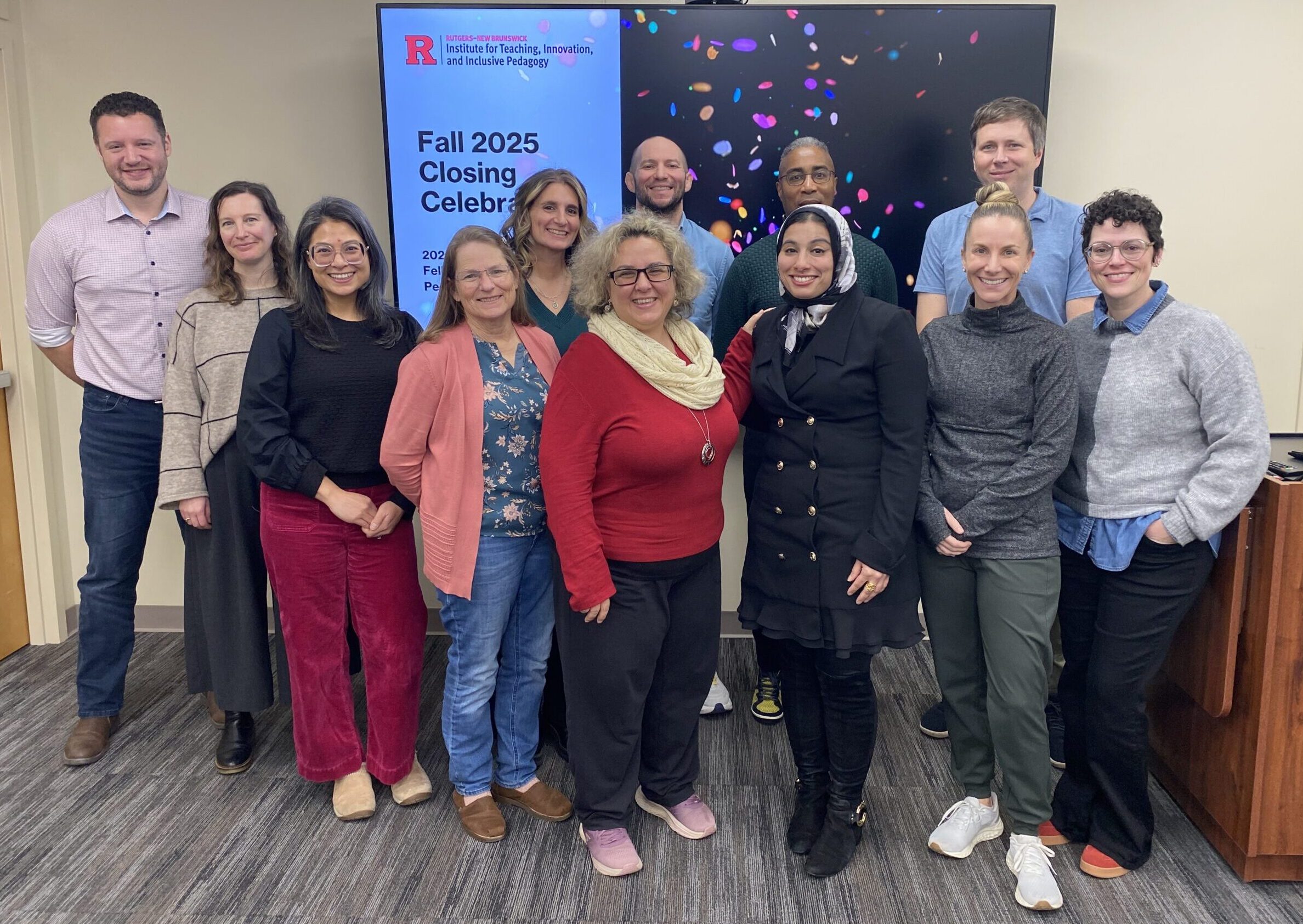
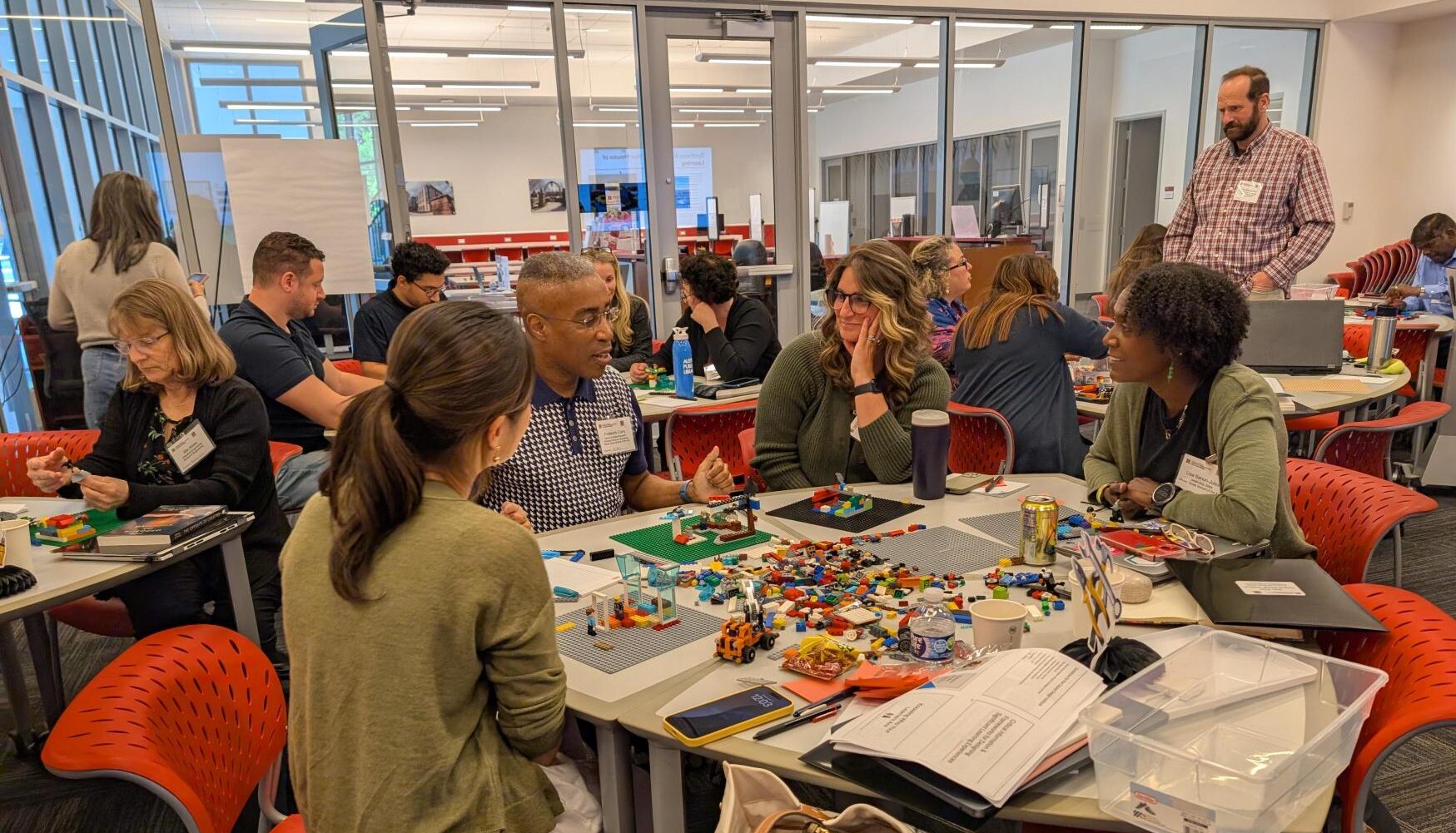
The fellows’ journey kicked off at TIIP’s three-day intensive Course Design Institute in May 2025. Through expert panels, interactive breakouts, and hands-on collaboration, fellows navigated the evolving landscape of Generative AI to design dynamic, student-centered courses rooted in active learning principles.

Gaining Momentum
Throughout the summer months, fellows met virtually with TIIP’s staff and collaborators to finalize their project goals and refine their course materials.
Building a Collaborative Community
Over the 2025–2026 academic year, the cohort met monthly for virtual sessions, creating a supportive peer community to share classroom successes and brainstorm solutions to instructional challenges. These gatherings focused on critical teaching topics, including designing accessible courses to meet ADA Title II standards, fostering student belonging and connection, and leveraging campus resources for experiential and active learning.
Integrating Student Voice
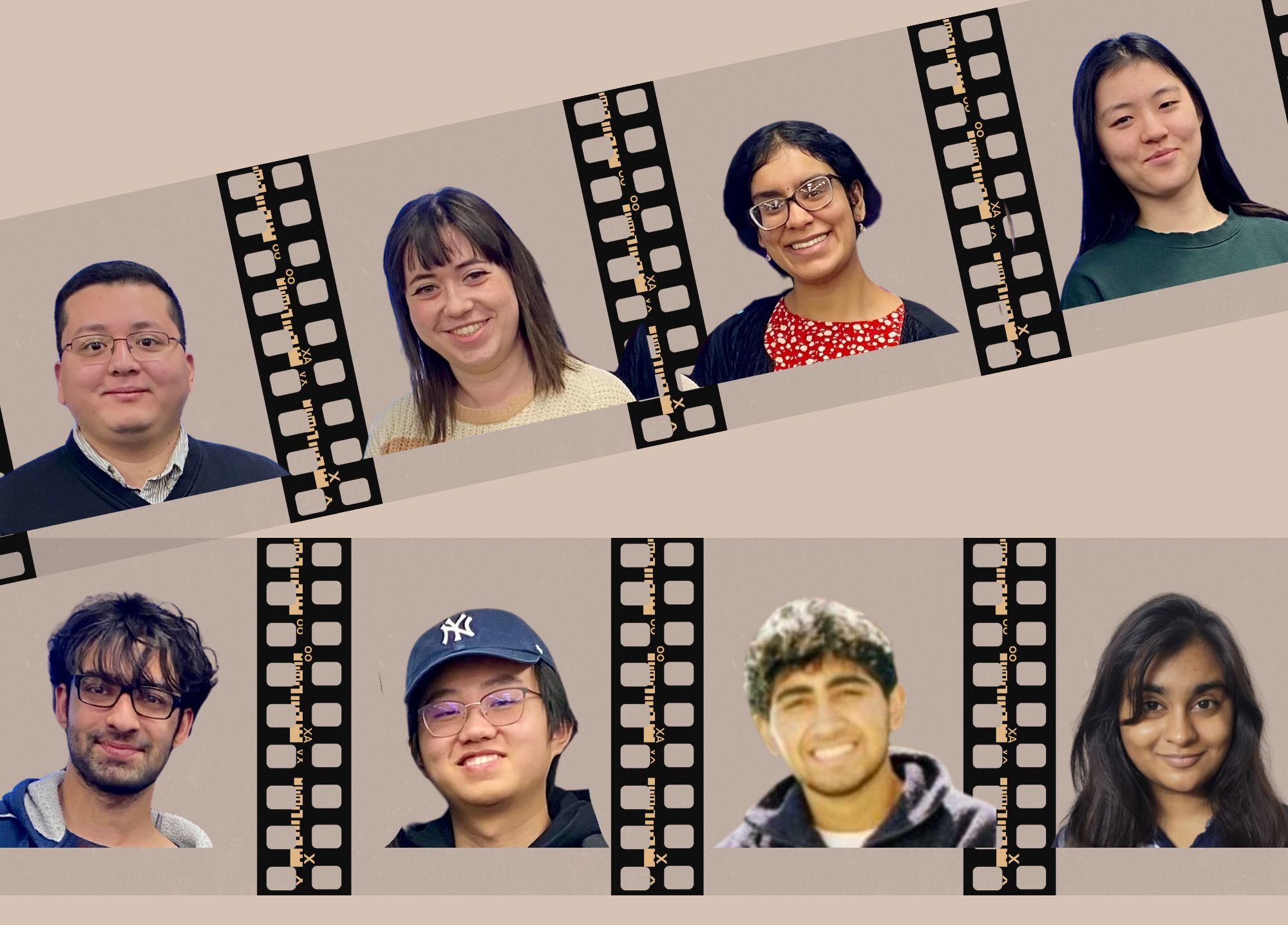
To bring theory into daily practice, fellows demonstrated incredible dedication to their teaching by welcoming TIIP’s trained Student Pedagogical Partners into their classrooms. Through a continuous observational partnership, instructors embraced the vulnerability of open feedback. Following a structured process of pre-observation planning, classroom visits, and reflective post-observation debriefs—with each fellow completing three full observation cycles each semester—fellows engaged in honest dialogue about the learning experience, generating actionable feedback directly from the student perspective.

Capturing a Year of Innovation
Synthesizing a year defined by deep intentionality, hard work, and continuous reflection, the fellows each developed a comprehensive final teaching portfolio. These portfolios captured their complete redesign process, outlining their methodologies, reflections, and key takeaways. More than just a final requirement, they serve as a tangible representation of their deep care for teaching and reflect a year of profound growth.
From Teaching Fellows to Pedagogical Leaders
The true success of this fellowship lies in its lasting contributions to our campus community. Rather than keeping their pedagogical innovations confined to their individual classrooms, the fellows committed to sharing their insights broadly.
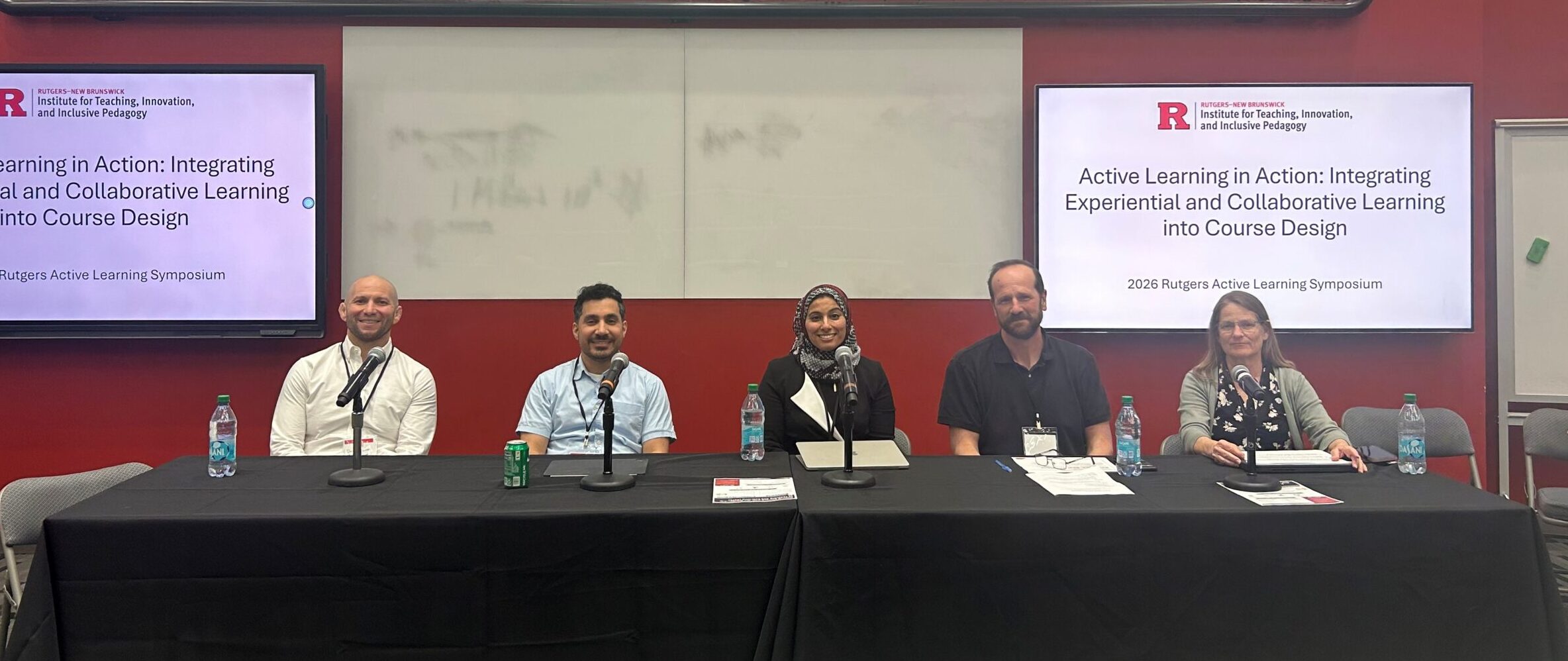
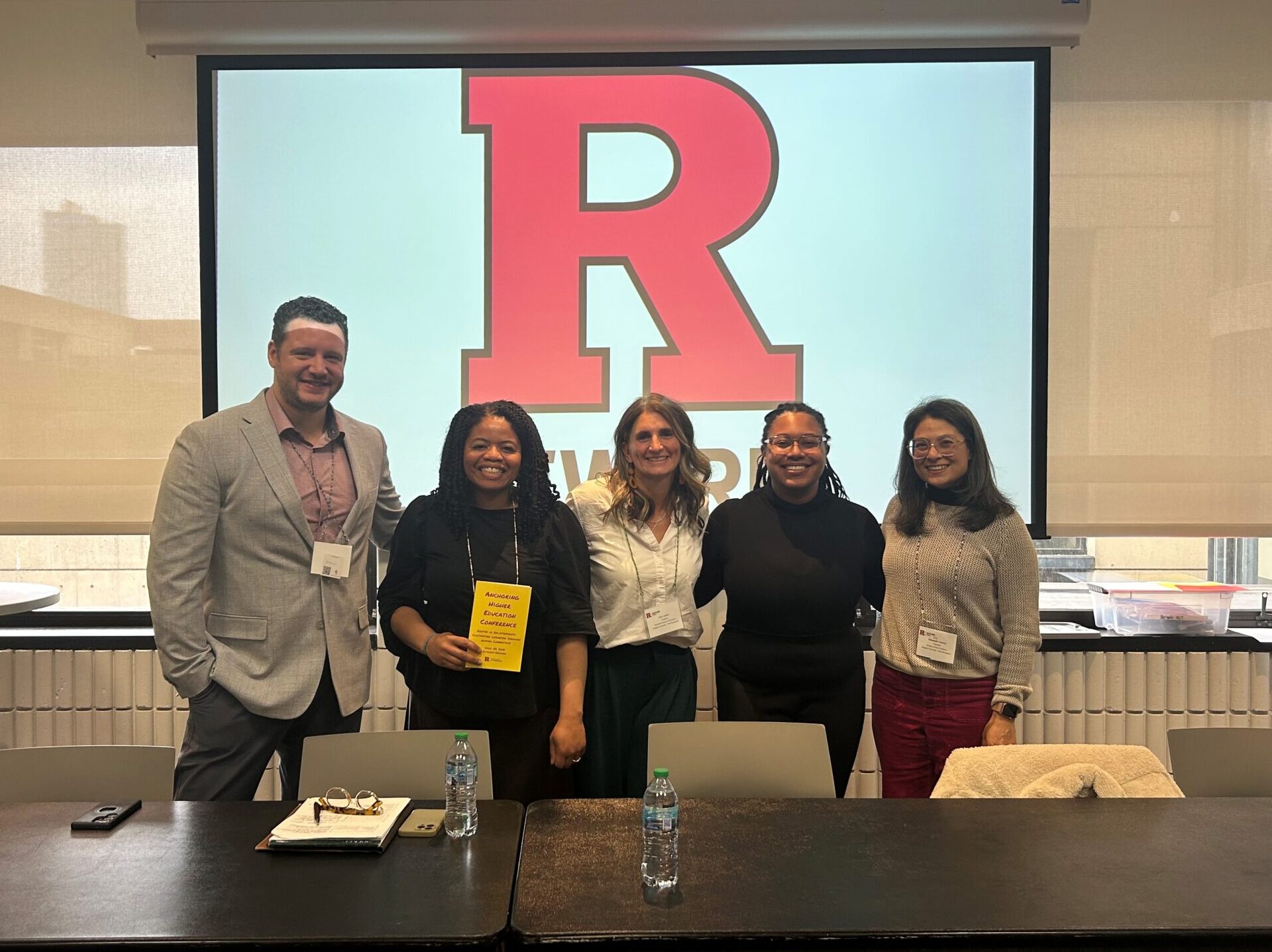
During the Spring 2026 semester, the cohort stepped onto several university stages to present their course design innovations more broadly at events like the Rutgers P3 Collaboratory Anchoring Higher Education Conference, the Rutgers Active Learning Symposium, and TIIP’s Virtual Teaching Symposium.
Reflections on the Fellow Experience
Beyond course redesign guidance and exposure to pedagogical frameworks, the fellowship is designed to offer a space for deep connection, fresh perspectives, and mutual support. In reflecting on their journey at the end of the program, many fellows emphasized this sense of community as one of their most valuable takeaways.
Regarding what was most meaningful about the fellowship:
- “Interdisciplinary perspectives and learning from the examples my peers shared. This inspired new learning and experiential opportunities for future iterations of my courses.”
- “Connection – motivation to keep moving.”
- “Moral support and learning about the innovative work of peers.”
- “Exposure to resources and opportunities I didn’t know about.”
- “Tips on deepening student engagement.”
- “Specific ideas for better engaging my students.”
- “Hearing the student perspective.”
- “I appreciated learning about my blind spots from my student partner’s perspective. I also enjoyed implementing the TILT method and infusing it in my course assignments and assessments.”
—Testimonials from various 2025–2026 Provost’s Teaching Fellows
Honoring a Year of Dedication
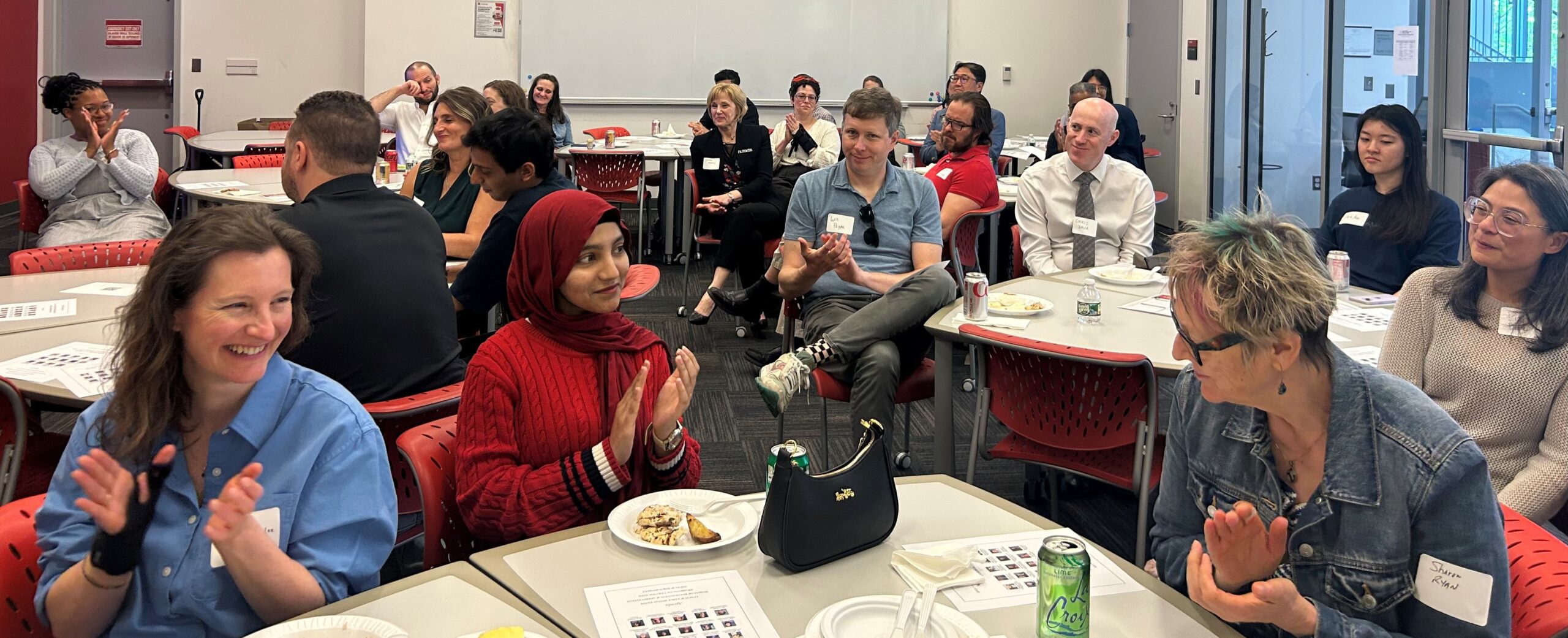
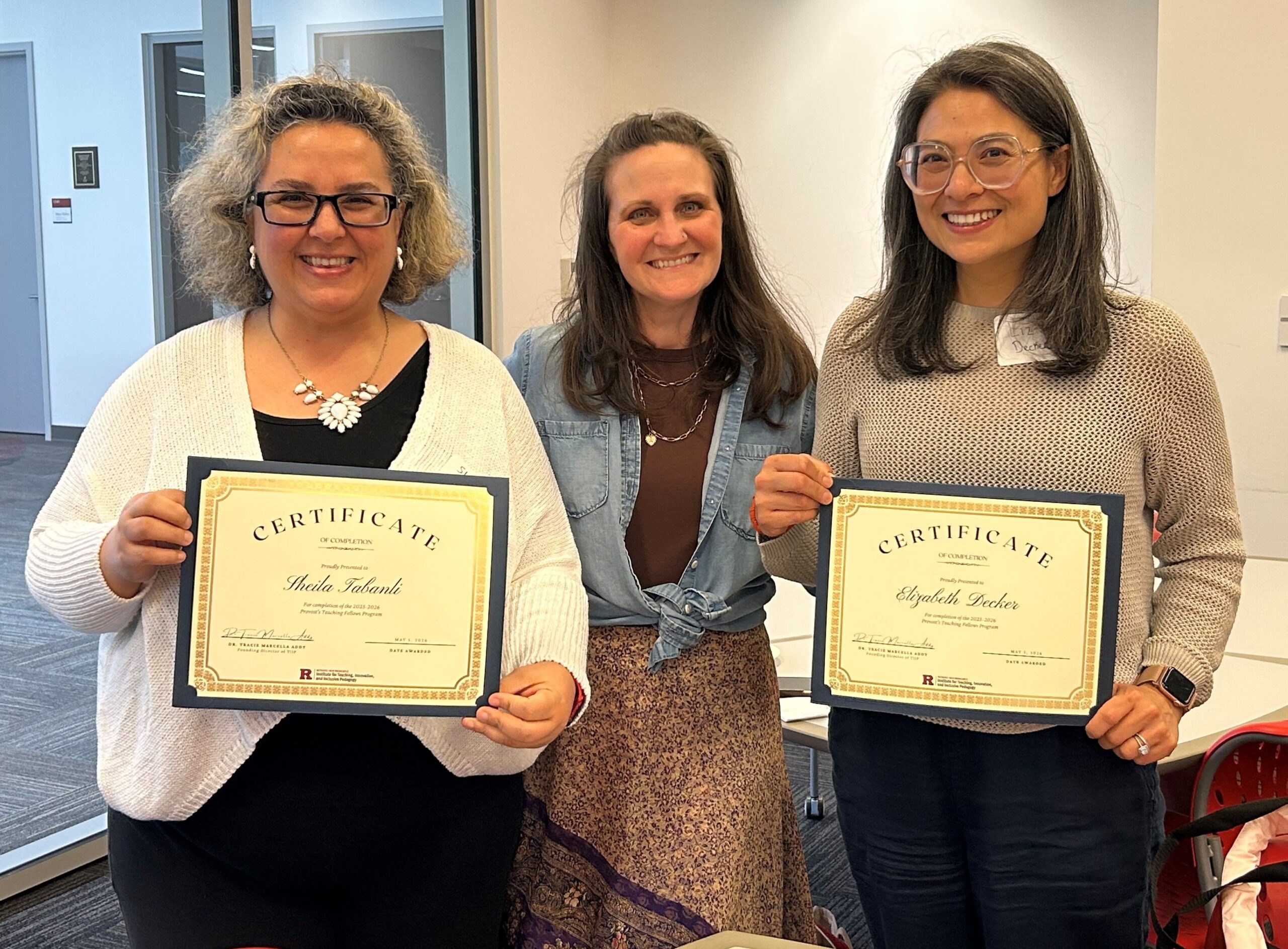
The fellowship year culminated with a closing luncheon in May 2026. The event served as a space to honor our fellows and their student pedagogical partners, acknowledge their innovative work, and publicly celebrate their contributions to student learning and engagement.
Reflecting on the year as a whole, the TIIP team is deeply grateful to have worked alongside these inspiring educators, and we look forward to our continued collaboration as they bring their innovations to life across campus. As they step into their roles as pedagogical leaders on campus, TIIP will be passing the torch to our incoming 2026–2027 cohort. We extend our warmest thanks to our outgoing fellows for their commitment to teaching, and to the Provost’s Office for making this work possible.